
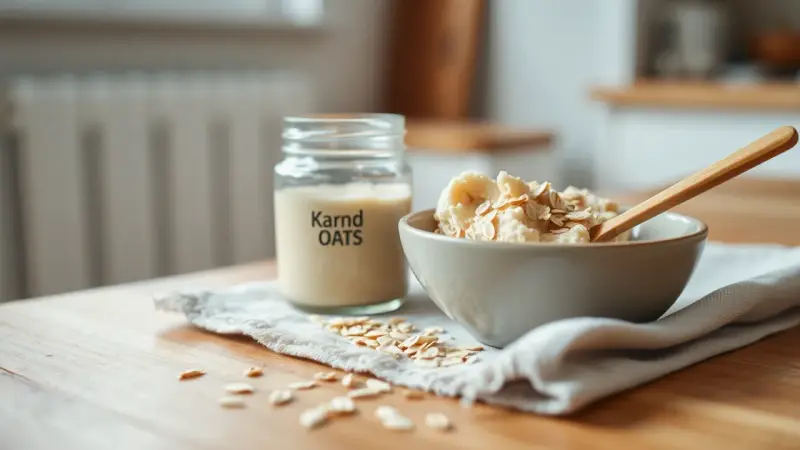
Overnight oats for baby are a soft, no-cook breakfast you can offer once your baby starts solids, usually around 6 months. A basic serving is 2 to 4 tablespoons of oats soaked overnight in 1/4 to 1/2 cup of breast milk, formula, or milk, with mashed fruit or plain yogurt. Leave out honey before age 1, and skip added sugar.
The recipe changes as your baby grows. A 6-month-old needs finely ground oats and a loose, smooth texture. A 9- to 12-month-old can handle thicker oats with soft fruit pieces. The steps below cover both.
Are overnight oats safe for babies?
Yes, overnight oats are safe for most babies who have started solids, as long as the texture fits their stage and the add-ins are age-appropriate. Soaking softens oats enough that they don’t need cooking. For a young eater, though, you may need to grind the oats or thin the mix.
Follow these safety rules:
- No honey before 12 months. The CDC and the American Academy of Pediatrics (AAP) warn that honey can cause infant botulism in babies under 1. This includes raw honey and honey mixed into recipes.
- No added sugar. The Dietary Guidelines for Americans advise avoiding added sugars before age 2, so skip maple syrup and brown sugar. Ripe banana or applesauce adds enough sweetness.
- Reduce choking risks. Smash or quarter blueberries. Mash soft fruit. Stir nut butter in thinly; never serve it in a thick glob. Leave out whole nuts and hard dried fruit.
- Watch for allergic reactions. Dairy, nut butters, and seeds are common allergens. Offer a new allergen in a simple form first, and talk to your pediatrician if your baby has eczema or a known food allergy.
- Gluten-free needs. Oats are naturally gluten-free but are often processed near wheat. If your family avoids gluten, buy oats labeled certified gluten-free.
Basic overnight oats for baby recipe (1 serving)
A baby serving of overnight oats needs only three parts: oats, liquid, and a soft fruit or yogurt. Prep takes about 5 minutes the night before.
What you need:
- Oats: 2 to 4 tablespoons of rolled oats or quick oats
- Liquid: 1/4 to 1/2 cup of breast milk, infant formula, water, or unsweetened milk or a fortified unsweetened milk alternative
- Fruit or yogurt: 1 to 2 tablespoons of mashed banana, unsweetened applesauce, pumpkin puree, or plain full-fat yogurt (dairy or dairy-free)
- Optional add-ins: about 1 teaspoon of chia seeds or ground flaxseed, a thin swirl of smooth nut butter, or a pinch of cinnamon
- Prep the oats. For babies new to solids, pulse rolled oats in a blender or food processor until they look like coarse flour. Finer oats soften completely overnight.
- Mix. Stir the oats, liquid, and fruit or yogurt together in a small jar or lidded container. If you’re using chia seeds, stir well so they don’t clump.
- Chill. Cover and refrigerate overnight, or for at least 4 to 6 hours, until the oats are fully soft.
- Adjust the texture. In the morning, add a splash of liquid if the mix is too thick, or stir in more oats next time if it’s too runny. Chia seeds thicken the mix as they soak.
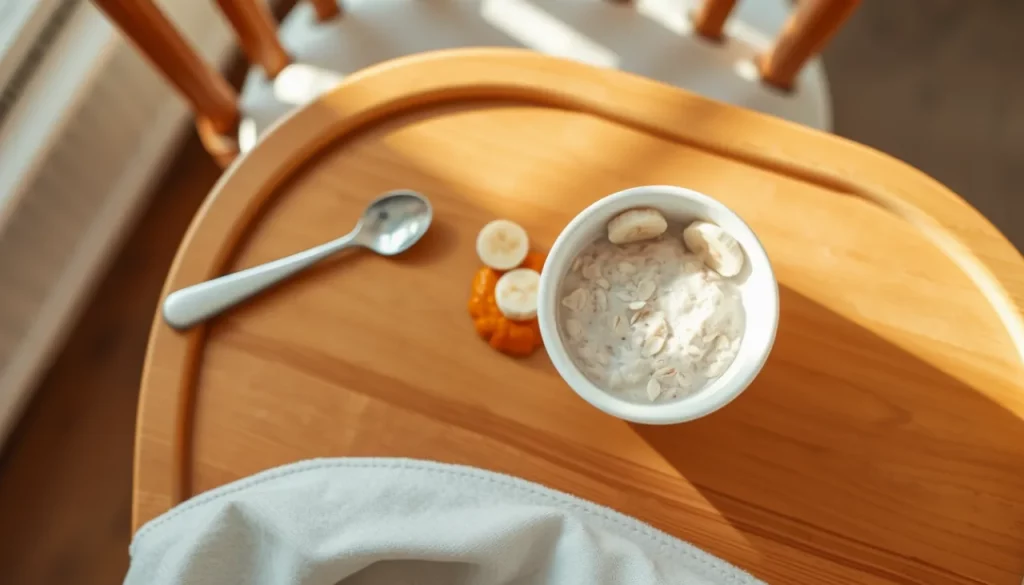
- Serve. Offer it cold or slightly warmed. You can spoon-feed it, put it in a bowl, or give a pre-loaded spoon to babies doing baby-led weaning. Baby-led weaning means letting the baby feed themselves soft finger foods instead of being spoon-fed purees.
Overnight oats for baby by age: 6, 9, and 12 months
The right overnight oats texture depends on your baby’s eating skills more than the exact month. Use this as a starting guide:
| Age | Oats | Texture | Good add-ins |
|---|---|---|---|
| About 6–7 months | Ground rolled oats or quick oats | Smooth and loose, like a thick puree | Breast milk or formula, banana, applesauce, pumpkin puree |
| About 8–10 months | Quick oats or rolled oats, unground | Thicker and spoonable, with soft lumps | Plain yogurt, smashed berries, chia seeds, thinned nut butter |
| About 11–12 months and up | Rolled oats | Close to the adult version | Soft diced fruit, cinnamon; honey and cow’s milk as a drink are fine after the first birthday |
Rolled oats are fine for a 6-month-old if they are ground fine or soaked until very soft. Whole rolled oats can feel too chewy for a beginner. Steel-cut oats stay firm even after soaking, so save them for later or cook them instead.
Which milk can you use in baby overnight oats?
Breast milk or infant formula is the easiest liquid for baby overnight oats because your baby already knows the taste. Water works too. The AAP recommends waiting until 12 months before giving cow’s milk as a drink. Small amounts cooked or mixed into food are generally considered fine before then. Plain whole-milk yogurt can also be used.
If you use a plant milk, choose an unsweetened, fortified version. Rice milk is not recommended as a main milk for young children. For babies with a milk allergy, use formula, breast milk, or water, and ask your pediatrician about alternatives.
One tip for breast milk: use milk that is still within safe storage time. Don’t mix in milk left over from a bottle your baby already drank from.
How long do baby overnight oats last in the fridge?
Baby overnight oats keep in a covered container in the refrigerator for up to 3 days. Batches made with yogurt or fresh fruit taste and hold up best when eaten sooner. Throw out any portion your baby’s spoon has touched rather than saving it, since saliva can spread bacteria.
To meal-prep, mix a few small jars at once, or keep a base of oats and liquid and add fruit the morning you serve it. A worked example for three mornings: blend about 3/4 cup of rolled oats until fine, divide it into three jars (about 1/4 cup each), add 1/4 cup of liquid to each, and stir in fresh banana or yogurt the night before each breakfast.
What if your baby doesn’t like overnight oats?
Babies who refuse overnight oats often object to the temperature or texture, not the oats themselves. Many babies need to try a new food several times before they accept it, so keep offering it calmly without pressure.
- Warm it slightly. Cold, thick oats can surprise a baby. Warm a portion briefly, stir it well, and test the temperature before serving.
- Change the texture. Thin it with more milk for a smoother feel, or blend the whole mix for a baby who gags on lumps.
- Switch the fruit. Try pumpkin, pear puree, or mashed berries instead of banana.
- Let them self-feed. Some babies eat more when they hold a pre-loaded spoon themselves.
- Eat it together. Make an adult jar from the same base, add your own toppings, and eat alongside your baby.
Homemade oats are not iron-fortified the way infant oat cereal is. Babies need iron from food starting around 6 months, so pair oats with other iron-rich foods during the day, or mix in a spoonful of fortified infant cereal.
FAQ
– Can I give my 4-month-old baby oatmeal in their baby bottle?
No, oatmeal or cereal should not go in a baby bottle unless your pediatrician specifically tells you to. The AAP advises against it because it can raise choking risk and lead to overfeeding. Most babies are ready for solids around 6 months, and the signs of readiness matter more than a date.
– Can a 6-month-old have chia seeds in overnight oats?
Yes, a 6-month-old can usually have chia seeds when they are fully soaked into the oats. Soaking turns them soft and gel-like. Start with a small amount, about a teaspoon, and stir well so no dry clumps remain.
– Can you heat up overnight oats for a baby?
Yes, you can warm overnight oats for a baby in the microwave or a small pot. Stir thoroughly to remove hot spots, then test a bit on your wrist or lip before serving. Lukewarm is enough.
– Can the whole family eat the same overnight oats?
Yes, one batch can feed the whole family if you make the baby-safe version first. Scoop out the baby’s portion, then add honey, sweeteners, nuts, or crunchy toppings to the adult jars.